
Helium leak testing for high-pressure CNG parts
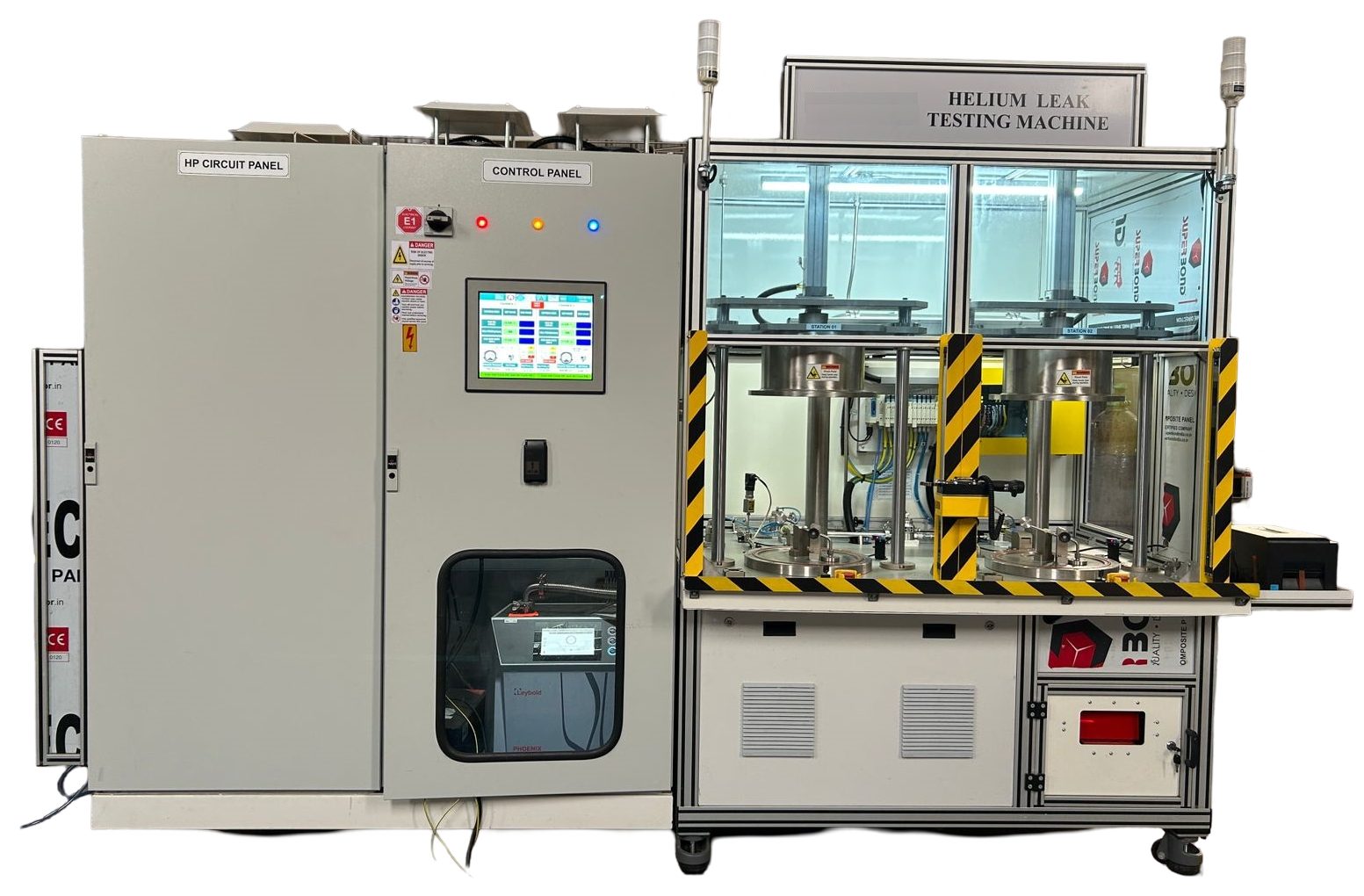
Helium leak test machines for CNG cylinder valves, pressure regulators, high-pressure pipes, fittings and fuel rails, tested at working pressure.
CNG components hold gas at very high pressure for years, so even a tiny leak is a safety risk and a cause for rejection under type-approval rules. Our CNG machines fill the part with helium at its test pressure inside a guarded station and measure the leak rate precisely, part by part.
Key features
- High-pressure helium filling with a safety enclosure and interlocks
- Vacuum chamber (inside-out) or accumulation method to suit the part
- Pressure-rated fixtures and quick connectors for each variant
- Pressure-hold pre-check to catch gross leaks before helium testing
- Helium recovery recommended, as high-pressure fills use more gas
- Leak-rate value and pass/fail stored against each part serial number
Technical specifications
| Test method | Vacuum chamber (inside-out) or accumulation |
|---|---|
| Parts tested | Cylinder valves, regulators, high-pressure pipes and fittings, fuel rails |
| Test pressure | 300 bar |
| Reject leak rate | 1.4 × 10⁻⁴ mbar·l/s |
| Cycle time | 60 seconds per part |
| Applicable standards | ANSI NGV 3.1 / CSA 12.3 |
| Helium leak detector | Pfeiffer Vacuum ASI 35 |
| Helium recovery | Recommended |
| Controls | PLC with touchscreen HMI |
Specifications are configured for each order. Send your part details for a machine matched to your leak-rate limit and cycle time.
Gallery
Questions about this machine
Why use helium instead of air for CNG parts?
CNG parts must hold gas at high pressure for many years. Helium testing finds far smaller leaks than air pressure-decay testing and measures the actual leak rate, which is what safety standards specify.
Is high-pressure helium testing safe for operators?
Yes, when the station is designed for it. We build the test area inside a guarded enclosure with interlocked doors, pressure relief and controlled venting.